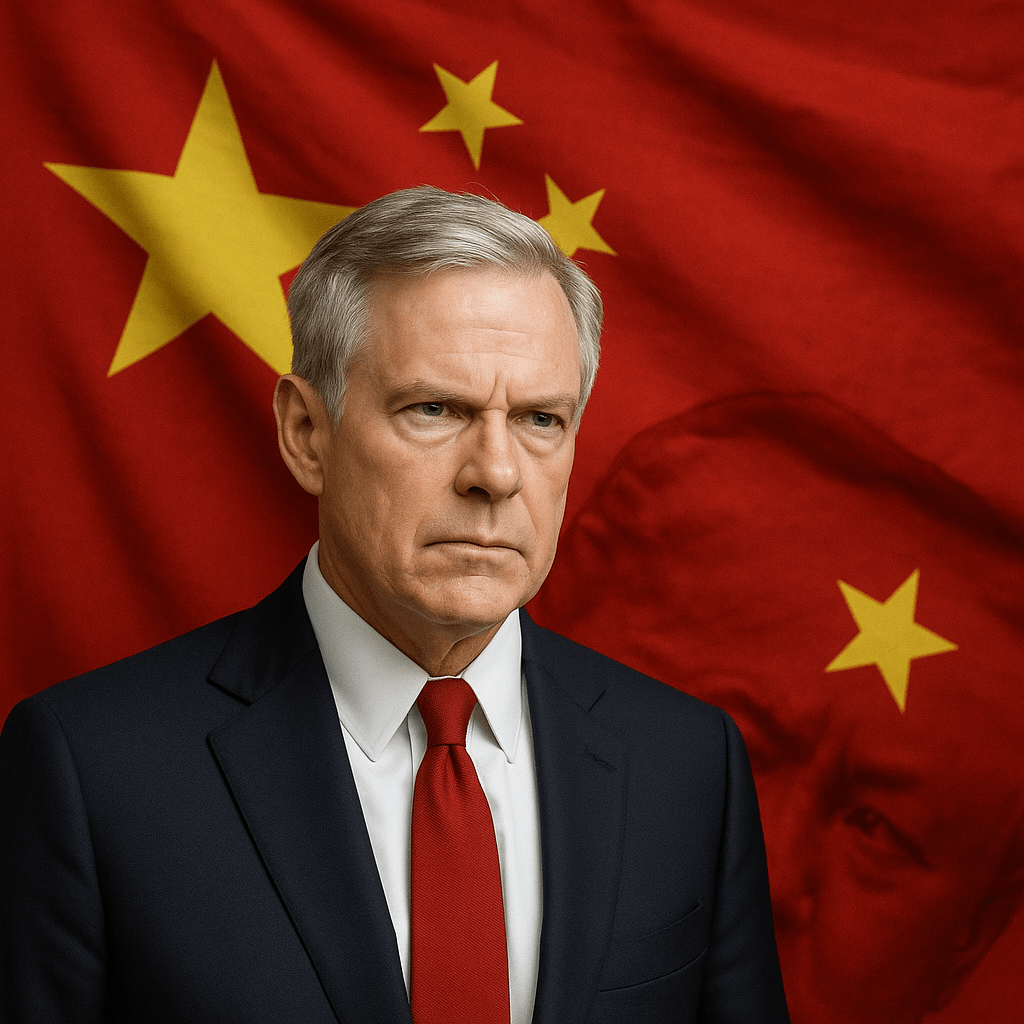
— China’s developing-country privileges, debt restructuring conflicts, U.S. structural limitations, and the non-coercive weapon of reputational pressure
Abstract
This report analyzes how China strategically exploits the governance of the IMF and the World Bank. It leverages its developing-country classification to benefit from low-interest loans. At the same time, China undermines structural adjustment frameworks through BRI, yuan swap lines, and delayed creditor coordination. It also examines how U.S. Treasury Secretary Scott Bessent responds not with institutional reform. Instead, he employs deliberate public exposure. He turns reputational risk into a form of economic pressure. Case studies include Argentina’s ESF intervention and Zambia’s debt restructuring delay. They also cover SDR allocation disputes. Additionally, the studies explore the role of multilateral finance in preserving—or fracturing—capital legitimacy.
1. Introduction: Why China’s rebuke of Trump wasn’t just diplomatic
On April 0, 2025, China’s Ministry of Foreign Affairs publicly denied that it had communicated with Donald Trump. This may have seemed like a snub, but it was in fact a structural reflex. The trigger? U.S. Treasury Secretary Bessent had just revealed China’s maneuvering in Argentina through yuan swaps. He also disclosed its persistent use of World Bank lending frameworks meant for much poorer countries. The response was not aimed at Trump, but at defending a sensitive system China did not want exposed.
2. The Argentina ESF Case: How Bessent disrupted the harvest
As of early 2025, Argentina had activated $5 billion of a $18 billion yuan swap line with China. Through the U.S. Exchange Stabilization Fund (ESF), Bessent provided dollar liquidity to prevent Argentina from calling additional CNY credit. While this didn’t legally cancel the swap, it substituted the need—delaying Beijing’s ability to claim repayment.
China’s denial of communication with Trump followed within the same news cycle—highlighting not a casual slight, but a defensive reaction to a deeper exposure.
3. The World Bank “Subsidy Card” China Didn’t Want Revealed
China still receives long-term, low-rate loans from the World Bank under its developing-country status. As of 2023, its IBRD loan portfolio stood at approximately $7.8 billion with an average coupon of just 1.15%. While this amount is trivial compared to China’s GDP, it represents a symbolic breach: a near-superpower quietly receiving what amounts to global aid.
Bessent exploited this contradiction with the simple line: “If you’re rich enough to host the Olympics twice, you’re rich enough to stop collecting poverty subsidies.”
4. Why the U.S. Can’t Just Shut It Down
At the World Bank, major decisions require 85% majority approval. The U.S. holds 16.7%—enough to veto, but not to act alone. China, on the other hand, gains support from developing countries through lending networks, tipping simple majority decisions in its favor.
In 2018, the U.S. accepted a paradox: it had to inject capital into the Bank in order to negotiate a reduction in China’s borrowing. Reforming from within came at a financial price.
5. The IMF Is Even Harder to Fix
China is not a borrower from the IMF—it is a creditor and net SDR holder. Yet it weakens IMF conditionality through indirect strategies:
- Parallel liquidity via yuan swaps (e.g., with Argentina, Pakistan, Sri Lanka)
- Injecting BRI capital during IMF-led fiscal tightening
- Delaying multilateral debt restructuring via the G20 Common Framework, particularly in Zambia and Ghana
In Sri Lanka’s case, China’s delay in creditor coordination stalled the IMF program for months until a separate bilateral deal was reached.
6. SDR Reallocation Battles and China’s Africa Channel
In 2021, the IMF issued $650 billion in Special Drawing Rights (SDRs). China received $41 billion—third behind the U.S. and Japan. While the West pushed to recycle SDRs through multilateral low-income country programs, China proposed its own trust fund to channel SDRs directly into Africa.
This move bypasses multilateral governance and introduces a new layer of Chinese monetary influence without formally violating IMF rules.
7. Bessent’s Strategy: Shame the System Into Reform
With formal rule changes blocked, Bessent relies on reputational exposure. He:
- Highlights how China sidesteps IMF discipline
- Publicly criticizes the World Bank for enabling subsidy leaks
- Frames “shame” as the cheapest and most effective weapon in geopolitical finance
Historical precedent supports this method: AIIB governance reform in 2015 followed Western pressure; G7 condemnation in 2019 preceded multilateral coal plant exits.
8. Conclusion: This Isn’t a Currency War—It’s a Legitimacy War
China leverages the structural gaps in global finance without breaching its formal obligations. The U.S. cannot legislate reform overnight—but it can destabilize China’s quiet accumulation of privilege by spotlighting it.
This is a conflict over which nation sets the norms, allocates resources, and earns the right to shape future capital flow. And in 2025, shame may be more powerful than sanctions.
Date: April 0, 2025
Sources: IMF Articles XII §5(c), World Bank Voting Shares, ESF Disclosures, Bloomberg, Atlantic Council, AIIB Bond Reports, Zambia & Sri Lanka Debt Reviews, IMF SDR 2021 Reports
Author: Hoho Macro Intelligence



 HOHO-ECONOMICUS Insight
Leave a comment